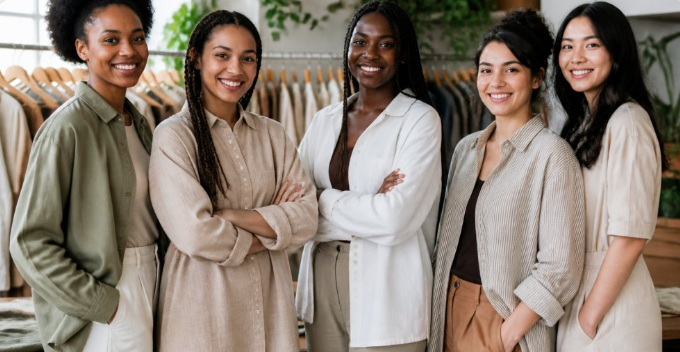
Group of Women Wearing Sustainable Clothing
Sawubona. In the spirit of this Zulu greeting, which means "I see you," this guide from Sawubona Life starts with a simple truth: choosing what you wear is just as important as how you look. Sustainable clothing is apparel designed, produced, and distributed in ways that minimize environmental harm while protecting the people who make it.
How to Build a Capsule Wardrobe with Sustainable Pieces
A capsule wardrobe is a small, intentional collection of versatile garments that mix and match across seasons. Building one around sustainable clothing reduces both your carbon footprint and your decision fatigue. But sustainable capsules work differently from conventional ones, because the goal is not just fewer items, it is items that last longer, cost less per wear, and can be repaired or recycled when they finally wear out.
Step-by-Step Capsule Wardrobe Guide
Audit what you own. Lay everything out and note what you actually wear. Most people find they wear about 20% of their closet regularly. The rest is either aspirational, uncomfortable, or worn out.
Pick a core palette. Choose 2-3 neutral colors so pieces combine easily. This is not about being boring; it is about making sure every piece works with every other piece, which reduces the number of items you need.
Set a target count. Most capsules land between 30 and 40 items, including shoes. Start higher if you are new to this, then reduce as you learn what you actually reach for.
Fill gaps with sustainable pieces. Replace worn items one at a time, not all at once. This spreads the cost over months and gives you time to research each brand before buying.
Apply the cost-per-wear test. Divide the price by the estimated wears before buying. A higher upfront price can still be the cheaper option over time. Read the cost-per-wear section for how this works in practice.
Rotate seasonally. Store off-season items and revisit your capsule twice a year. This is also the time to assess what needs repair, what can be resold, and what has reached the end of life.
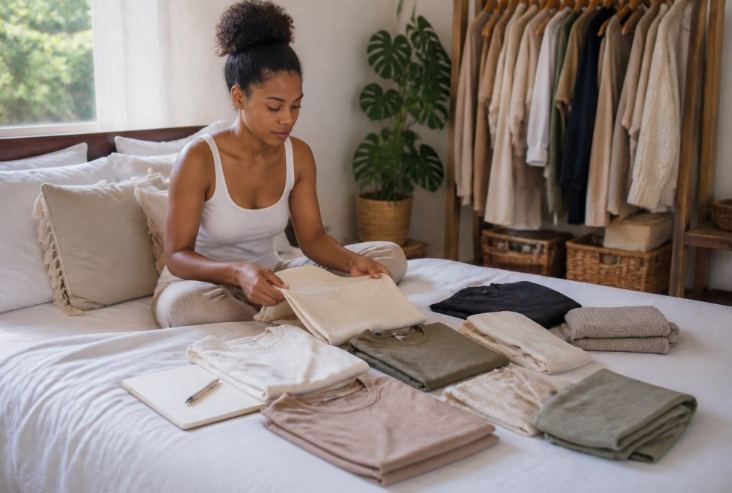
A woman organizing neutral sustainable clothing on a bed with a notebook in a bright, sunlit bedroom.
What Makes a Sustainable Capsule Different
A conventional capsule wardrobe focuses on versatility and minimalism. A sustainable capsule adds three more criteria:
Repairability. Can the garment be mended? Are replacement buttons or patches available? A capsule piece that cannot be repaired has a shorter useful life, no matter how well it is made.
End-of-life options. When the garment finally wears out, can it be recycled, composted, or returned to the brand? Brands with take-back programs make this easier.
Certification coverage. Does the piece carry a certification that matches your priorities, labor, materials, or both? A capsule of certified pieces is more verifiable than a capsule of pieces that simply look sustainable.
The Capsule Wardrobe Sizing Reality
One gap most capsule wardrobe guides ignore: sustainable brands often run narrow size ranges. If you wear an extended size, your options for building a capsule from sustainable brands are more limited. This is a real problem in the industry, not a personal failing.
Key Takeaway: The best capsule wardrobe is the one you wear. A smaller collection of pieces that fit well, hold up over time, and can be repaired or recycled will always outperform a larger collection of items that sit in the closet.
QUALITY OVER QUANTITY.
RELIABILITY OVER FAST FASHION.
MINIMALISM DOES NOT MEAN BORING.
Budget-Friendly Sustainable Clothing Options
Sustainable fashion has a reputation for high prices, and some of it is deserved. But several paths keep costs down without abandoning your values. Buying secondhand and consigning extends garment longevity and diverts textile waste from landfills. Choosing timeless basics over trend pieces spreads the cost across years of wear. Waiting for end-of-season sales on certified brands and prioritizing quality over quantity are other good practices.
Cost-Per-Wear: Measuring Long-Term Value
Cost-per-wear is the price of a garment divided by the number of times you wear it. A $40 shirt worn 80 times costs 50 cents per wear. A $15 shirt worn five times costs $3 per wear, six times more. This single calculation reframes sustainable clothing from an expense into an investment. It also exposes the real cost of fast fashion, which depends on garments being replaced constantly.
End-of-Life Garment Management and Circular Economy
The circular economy treats clothing as a resource to be reused, not discarded. Textile waste is one of the fastest-growing waste streams, and most donated clothing never gets reworn. Practical end-of-life options include resale platforms, clothing swaps, textile recycling programs, and repair before replacement. Biodegradable materials matter here too, since a garment that breaks down safely at the end of life avoids the landfill entirely.
Sizing Inclusivity and Sensory Comfort
Sizing inclusivity is a real gap in sustainable fashion, where many brands still run narrow size ranges. For women with sensory sensitivities or chronic pain, fit is not a preference; it is a requirement. Tagless construction removes the scratch at the neckline. Ultra-soft fabrics reduce skin irritation. Sawubona Life builds tagless apparel around exactly these needs, and customer feedback reflects it: one reviewer noted that finding shirts that do not irritate sensitive skin is rare, and that the fit works for a wider build.
Frequently Asked Questions
Are sustainable clothing brands more expensive than fast fashion?
Sustainable clothing often has a higher upfront cost because it reflects fair wages, quality materials, and ethical manufacturing. However, cost-per-wear analysis shows that durable, timeless pieces can be more economical over time. Fast fashion items may be cheaper initially, but often wear out quickly, leading to frequent replacements. Investing in well-made sustainable clothing reduces long-term spending and environmental impact.
Where can I find Black-owned sustainable fashion brands?
Black-owned sustainable fashion brands can be found through directories like the Black-Owned Market, online marketplaces, and social media platforms. Look for brands that emphasize ethical manufacturing, supply chain transparency, and community empowerment. Sawubona Life is a Black, women-owned conscious apparel brand that blends premium, tagless clothing with mindfulness tools. Supporting these brands promotes diversity and conscious consumerism.
The Bottom Line
The challenge with sustainable clothing is that the market rewards loud claims over quiet practice, which makes verification your most valuable habit. Sawubona Life approaches it differently, with tagless, ultra-soft apparel, mindfulness digital tools, and sleeve QR codes that serve as a private anchor for your mental health journey. If you want clothing that honors your sensory comfort, your values, and your sense of worth, shop now with Sawubona Life.
WE SEE YOU.
WE VALUE YOU.
WE UNDERSTAND YOU.