
A woman's hands gently touching the soft, tagless neckline of an organic cotton lounge top in a sunlit room
Why Organic Cotton Tagless Loungewear Is Different
Sawubona. In the spirit of that isiZulu greeting, we see you: your sensory needs, your values, and your right to be comfortable in your own skin. If you are looking to buy organic cotton tagless lounge wear, the difference comes down to two things working together: the fiber itself and the absence of a scratchy label against your neck. This guide from Sawubona Life breaks down what actually matters before you spend.
Organic cotton is cotton grown without synthetic pesticides or fertilizers and processed without the chemical finishes used in conventional textile production.
What Makes Organic Cotton Better for Sensitive Skin
Conventional cotton can carry residue from dyes and finishing agents that irritate reactive skin. Organic cotton skips many of those steps, and when it is also hypoallergenic and chemical-free, it becomes a realistic option for people who react to ordinary fabrics. The fiber is often long-staple cotton, which means longer strands, a smoother surface, and less pilling over time.
The Real Difference Between Tagless and Tagged
A tagless design removes the sewn-in label that rubs against the back of your neck all day. For anyone with sensory sensitivities, that single seam can be the difference between a shirt you forget you're wearing and one you're tugging at by noon. Tagless construction also removes a common trigger for people managing chronic pain or skin irritation.
Sensory-Friendly Clothing for Adults: What to Look For
Sensory-friendly clothing for adults prioritizes how a garment feels against skin, not just how it looks. The best options combine soft fabric, flat seams, and a tagless neckline so nothing scratches or presses. But "soft" and "tagless" are marketing words until you know what to inspect. Here is what actually separates a garment you forget you're wearing from one you're peeling off by noon.
Check these before buying:
Fabric weight: lighter knits breathe better; heavier knits feel cozier in cold rooms
Seam type: flatlock seams lie flat against skin; standard overlock seams create a raised ridge that rubs
Neckline construction: a printed label, a heat-transfer label, or a tagless finish all beat a sewn-in tag
Fit: relaxed but not baggy, so fabric doesn't bunch and twist
Fiber length: long-staple cotton has fewer exposed fiber ends, which means less prickle and less pilling
Dye and finish: undyed or low-impact dyed fabric skips the chemical residue that can trigger reactive skin
Fabric Weight and Breathability Explained
Fabric weight is measured in grams per square meter (GSM). It determines how a garment feels against your skin and how it handles temperature. A lighter knit (roughly 150-180 GSM) is breathable and moisture-wicking for warmer rooms. A midweight knit (around 180-220 GSM) holds shape and warmth without feeling heavy. A heavier knit (240 GSM and up, often brushed or fleeced) traps heat for cold rooms but can feel oppressive to someone who runs warm during sensory overload.
Why the Tagless Detail Matters More Than Most Shoppers Realize
A sewn-in tag sits at the highest-friction point on a shirt: the back of the neck, where the fabric moves against skin with every turn of the head. For most people, it's a minor annoyance. For someone with sensory processing differences, autism, ADHD, eczema, or chronic pain, that single seam can be the reason a garment never gets worn. Tagless construction, whether the size and care information is printed directly on the fabric or transferred with a soft heat-transfer label, removes that friction point entirely.
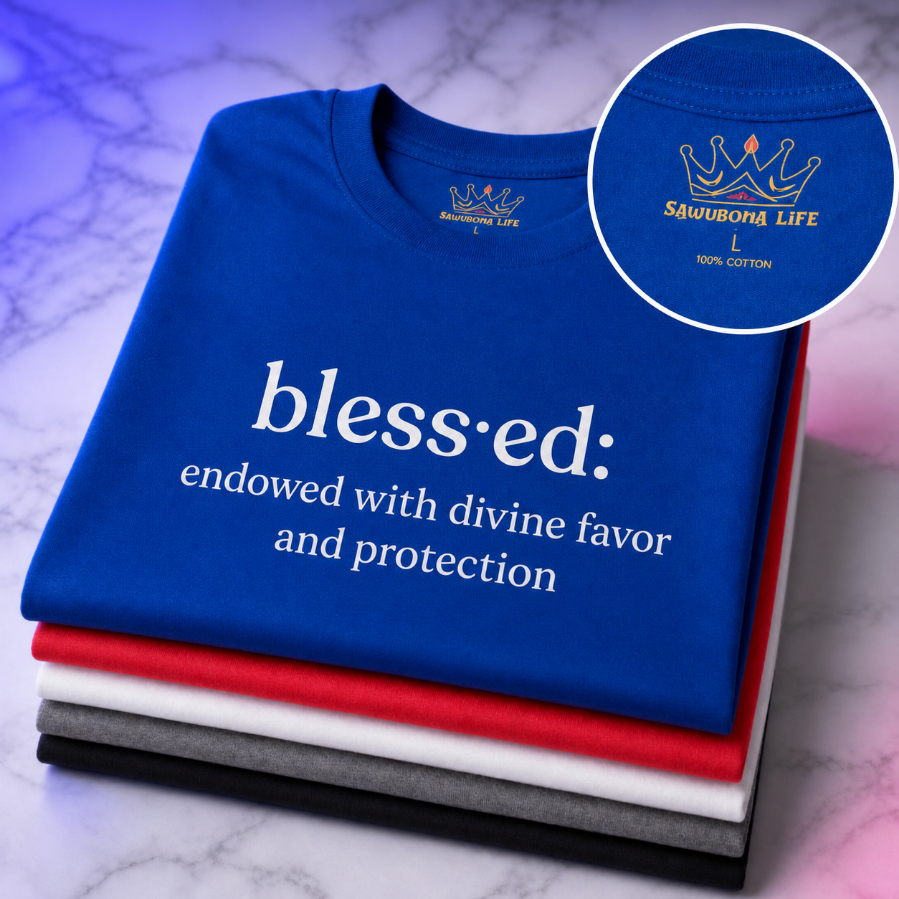
Blessed Blue Unisex Graphic Tee - Affirmation Apparel by Sawubona Life
Pro Tip: Turn the garment inside out before you commit. Run your fingers along the shoulder seams and the back neckline. If you can feel a ridge or a rough edge, that is what your skin will feel all day.
A Note on Fit and Sensory Load
Fit is a sensory variable, not just a style one. A garment that is too loose bunches and twists, creating unpredictable contact. A garment that is too tight creates constant pressure. The goal is a relaxed cut that skims the body without dragging, with enough stretch in the knit to move when you do. For lounge wear specifically, that usually means a slightly dropped shoulder, a straight or gently tapered body, and a hem that doesn't ride up when you sit.
Benefits of Tagless Clothing for Daily Comfort
The benefits of tagless clothing show up in small, daily ways. No label means no constant itch at the neck, fewer distractions during work or rest, and one less thing competing for your attention when you're already overstimulated. For people with sensory processing needs, that quiet comfort is not a luxury; it's the point.
Pro Tip: Check the neckline construction before you commit. A printed label or a tagless finish tells you the brand thought about skin contact, not just the design on the front.
GOTS Certified and Non-Toxic Dyes: What They Mean
GOTS certified means a garment meets the Global Organic Textile Standard, a voluntary international standard that covers organic fiber content, processing, and social criteria across the supply chain. It is not a single-factory stamp. It applies at every stage: the farm that grows the cotton, the mill that spins and knits it, the dye house that colors it, and the cut-and-sew facility that assembles the final piece.
What GOTS Actually Requires
The standard sets thresholds at two levels. "Organic" labeled products must contain at least 95% certified organic fibers. "Made with organic" products must contain at least 70%. The remaining percentage is restricted to a short list of approved fibers, and the same fiber cannot be both conventional and organic in the same blend.
Beyond fiber content, GOTS sets limits on:
Chemical inputs: a restricted substances list governs what dyes, auxiliaries, and finishes can be used, with limits on heavy metals, formaldehyde, and aromatic amines
Wastewater treatment: dye houses must treat effluent before discharge, which matters because conventional textile dyeing is one of the most water-polluting steps in apparel
Social criteria: workers must have safe conditions, fair wages, and the right to organize, based on International Labor Organization conventions
Traceability: every handler in the chain is certified, so the organic claim can be verified rather than taken on faith
Non-Toxic Dyes: What the Term Really Covers
"Non-toxic dyes" is a loose marketing phrase, but it maps to something concrete. The dyes most associated with skin irritation and environmental harm are azo dyes that can break down into aromatic amines, some of which are classified as carcinogens. GOTS and similar standards prohibit or strictly limit that class, along with heavy-metal-based mordants like chromium and copper compounds.
Key Takeaway: If sensitive skin is your main concern, the hierarchy is as follows: undyed organic cotton, then GOTS-certified low-impact or fiber-reactive dyed organic cotton, then conventional organic cotton with unclear dye disclosure. The certification is what makes the claim checkable.
Why This Matters for Tagless Lounge Wear Specifically
Tagless construction removes the mechanical irritation, the sewn tag. But mechanical irritation is only half the problem for reactive skin. The other half is chemical: residual dyes, formaldehyde finishes, and softening agents that conventional cotton can carry. A garment can be perfectly tagless and still trigger a reaction if the fabric was finished with the wrong chemistry. That is why the tagless and organic claims belong together.
How to Evaluate Ethical Manufacturing and Fair Trade
Ethical manufacturing means the people who make your clothes work in safe conditions and are paid fairly. Fair trade certification and supply chain transparency let you verify those claims instead of trusting a marketing line. Ask brands for traceability: where the cotton grows, where it's spun, and who sews the final piece.
Loungewear vs. Sleepwear: Versatility and Fit
Loungewear and sleepwear overlap, but they are not the same. Sleepwear is built for bed; loungewear is designed to move between rooms, errands, and rest without a change. Versatile pieces in soft, breathable fabric work as clothing you can wear all day, which is why many people build a small capsule wardrobe around them.
End-of-Life Recycling and Biodegradable Fabrics
Biodegradable fabrics break down at the end of their life, and organic cotton is one of them. Garment recycling programs keep textiles out of landfills and turn old pieces into new fiber. Slow fashion favors fewer, better-made items you actually wear, which lowers waste before recycling even starts.
Frequently Asked Questions
Why is tagless clothing better for sensory processing issues?
Tagless clothing removes the scratchy, stiff labels that often trigger irritation for people with sensory processing differences. Without a tag rubbing against the neck or waist, there is less tactile distraction, which can help reduce daily discomfort and allow you to focus on other things. For many, this small design change makes a noticeable difference in how clothes feel against the skin.
What are the benefits of organic cotton for loungewear?
Organic cotton is grown without synthetic pesticides and processed without harsh chemicals, making it gentler on sensitive skin. It is naturally breathable, moisture-wicking, and soft, which helps regulate temperature and reduce irritation. Unlike some synthetic fabrics, organic cotton is also biodegradable at the end of its life, supporting a more environmentally conscious wardrobe.
How do I know if clothing is truly sensory-friendly?
Look for specific design details: tagless necklines, flat seams, soft non-toxic dyes, and fabric weights that suit your comfort preferences. Check whether the brand provides detailed material specs, such as fabric weight and fiber content, rather than vague claims. Reading customer reviews from people with sensory sensitivities can also help you judge whether a piece will work for you.
What should I look for when buying loungewear for chronic pain?
Prioritize soft, breathable fabrics like organic cotton that do not press or rub against painful areas. Tagless designs and flat seams reduce friction, and a relaxed but true-to-size fit avoids restrictive pressure. Check the return policy before buying, since fabric feel is personal and you may need to try a piece to know if it works for your body.
The Bottom Line
Choosing organic cotton tagless loungewear is a decision about how you want to feel every day, not just what you pull off the shelf. Sawubona Life builds premium, ultra-soft, tagless apparel as an everyday anchor for your mental health journey, with subtle sleeve QR codes for quiet advocacy and a foundation rooted in mutual recognition and dignity. As a Black, women-owned brand, we design for sensory comfort and cultural identity together.
WE SEE YOU.
WE VALUE YOU.
YOU DESERVE THE BEST.